
Post-Construction Cleaning for Oakville Ontario Homes: Protecting High-End Finishes

Table of Contents
Why Post-Construction Cleaning Is Different from Regular House Cleaning
Construction Dust Removal: Start with a Careful Cleaning Sequence
A Practical After-Renovation Cleaning Checklist for Oakville Homes
Post-Construction Cleaning in Oakville, Ontario: DIY or Professional Services?
Conclusion: Clean Carefully to Help Protect Your Home's Finishes
Why High-End Finishes Need Special Care After Construction
Newly built and renovated homes can hold drywall residue, sanding dust, adhesive traces and paint splashes long after the work is finished.
In a home with premium materials, the final clean has to remove that residue without harming the surfaces underneath. That is why post-construction cleaning in Oakville, Ontario, is less about speed and more about sequence, tools and matching the method to each surface.
This Squeaky Cleaning guide covers how to clean and protect marble, hardwood, glass, cabinetry and other finished surfaces, and when it may make sense to bring in help.
Why Post-Construction Cleaning Is Different from Regular House Cleaning
Routine cleaning handles everyday dirt. Cleaning after construction deals with residue your home has never had before, and it needs a more systematic order of work. Whether it’s new construction cleaning in a freshly built home or a remodel, you may find:
Fine drywall and sanding dust
Dust settled on ledges, cabinetry, fixtures and trim
Adhesive or label residue
Paint splashes or other localized marks
Dust trapped in corners, window tracks and less visible areas
Not every project leaves every one of these behind, and the right removal method depends on both the material and the type of residue. For example, dried paint on tile is a different problem from adhesive on a painted door.
Avoid reaching for a scraper, solvent or abrasive pad until you have confirmed that the surface can tolerate it. A quick check of the manufacturer's care instructions costs far less than replacing a scratched panel.
Construction dust also isn’t one material. Depending on the project, it can come from drywall, wood, concrete or stone, and the finest particles are too small to see, so a quick wipe-down may not catch everything. What Is Dust? explains what dust is made of and why it behaves this way.
Construction Dust Removal: Start with a Careful Cleaning Sequence
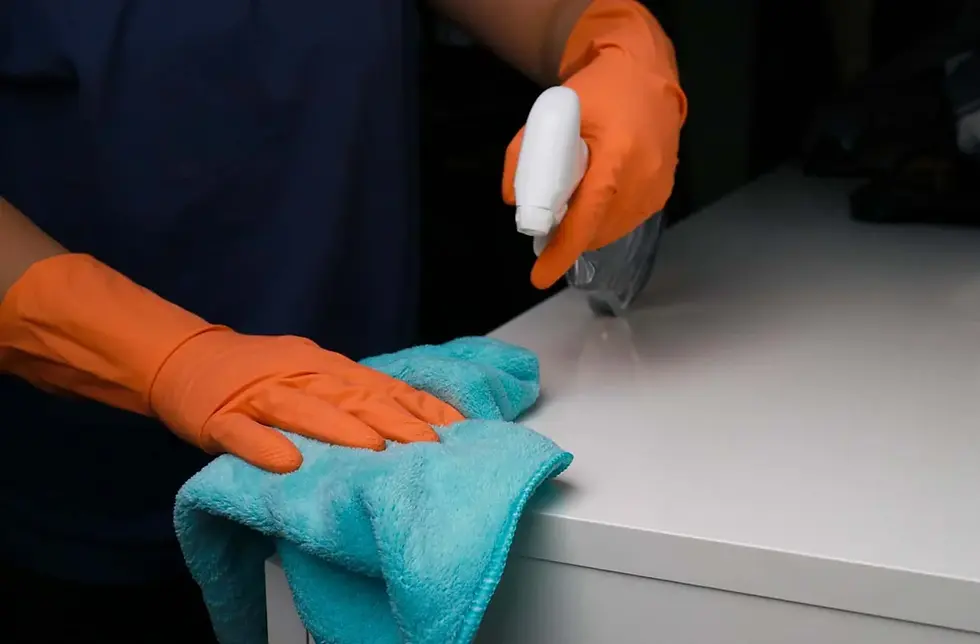
The most common mistake in construction dust removal is moving dust around instead of removing it. Wiping a shelf, walking across the floor, then wiping again just redistributes fine particles. Working in a deliberate order keeps dust from settling back on surfaces you’ve already cleaned
A few general principles help:
Wait until dusty work is done: Allow sanding, cutting and other messy trades to finish before the final clean.
Use suitable equipment and dust-control precautions: Check the manufacturer's guidance for any vacuum or tool you plan to use. Ordinary household equipment can clog, be damaged by fine powder, or blow it back into the room.
Work from high to low: Start with higher surfaces, then move down so dislodged dust falls onto areas you have not cleaned yet.
Deal with dust collectors before the floors: Ledges, trim, cabinet exteriors and fixtures come first; floors come last.
Recheck after the first pass: Fine dust settles again, so a second look is normal.
Finish with a material-appropriate wipe or polish: The final touch should suit the surface, not simply be whatever is on hand.
Drywall dust removal deserves particular care. The powder is very fine and spreads easily, and it can be abrasive, so dragging a dry cloth across a delicate finish is not a safe shortcut. Remove loose dust first with appropriate methods, then clean the surface according to its material.
A common cleaning approach is to work from high to low, finishing with the floors and how to clean a house professionally covers the broader approach. For a step-by-step guide to the dust itself, see how to clean construction dust after renovation.
Marble Countertop Cleaning: Avoid Damaging Natural Stone
Marble is beautiful and sensitive. Certain products and physical abrasion can etch, scratch or dull it, so the goal of marble countertop cleaning after a renovation is to remove residue without leaving new marks behind.
Confirm what you have. Marble is natural stone. Engineered stone, quartz and other countertop materials have different care requirements, so identify the material before choosing a product.
Follow the care instructions. Use guidance from your stone supplier or manufacturer.
Choose a non-abrasive method approved for the surface. If you are unsure whether a product is safe, check before using it.
Skip acidic cleaners. Products containing vinegar, lemon or other acids may dull or etch marble.
Don’t scour or scrape. Avoid abrasive pads, and do not try to chip off hardened residue until you have confirmed a safe removal method.
Get material-specific advice for stubborn residue. Paint, adhesive and grout in particular may call for guidance from the stone supplier or a stone specialist.
A generic cleaning solution may not safely remove every construction mark, and if the stone is already etched or scratched, cleaning alone is unlikely to fix it. In that case, a stone restoration specialist is usually the best person to ask.
Protecting Hardwood Floors and Other Finished Flooring
Floors are usually the last step of after renovation cleaning, and they should be assessed before you begin. Fine dust and leftover grit can scratch some finishes as they are dragged across the surface, which is why the order of work matters here too.
Remove loose debris first using suitable equipment before any damp cleaning.
Limit moisture. Excess water can harm hardwood and engineered wood.
Use products approved for your specific floor finish.
Check the manufacturer’s guidance before removing adhesive, paint or grout residue.
Take care at transitions, edges and new trim, where moisture and tools can cause damage.
Hardwood, engineered wood, tile, laminate and natural stone do not share the same cleaning requirements, so a single approach for the whole house is rarely appropriate.
Follow your flooring manufacturer’s instructions, including any guidance on when and how a newly installed or refinished floor can be cleaned. The National Wood Flooring Association’s maintenance guidance is a general industry reference for wood floors.
Cleaning Glass, Fixtures, Cabinetry, and Premium Finishes

A renovated home usually mixes many materials, and each can need a different approach. Where you are unsure about a finish, check the product instructions before going further.
Glass and windows
Remove loose dust and debris before wiping to reduce the risk of scratching.
Use tools and products suitable for both the glass and the surrounding frame.
Take extra care around tracks, seals and newly finished trim.
Cabinetry and millwork
Remove loose dust before wiping.
Use a cleaner suited to the cabinet finish.
Avoid soaking seams, exposed edges or unfinished surfaces.
Metal fixtures
Find out whether the finish is chrome, brushed metal, coated hardware or another specialty surface.
Avoid abrasive products that can dull or scratch the finish.
Painted walls and trim
Confirm that the paint or coating is ready to be cleaned.
Follow the manufacturer's instructions, especially on newly painted surfaces.
A Practical After-Renovation Cleaning Checklist for Oakville Homes
If you are planning post renovation cleaning in Oakville, use this list to check your progress:
Confirm that construction work and dusty trades are complete.
Identify delicate materials and review their cleaning instructions.
Remove loose dust from high surfaces and accessible ledges.
Clean cabinetry exteriors, trim, fixtures and other dust-collecting areas.
Address window glass and tracks using suitable methods.
Check countertops and other premium surfaces for construction residue.
Clean floors using the right method for each flooring material.
Inspect corners, edges and less visible areas for remaining dust.
Recheck surfaces for dust that settled after the first pass.
Arrange specialist advice for stubborn residue or surfaces that may already be damaged.
For a more detailed walkthrough, see our Post Construction Cleaning Checklist.
Post-Construction Cleaning in Oakville, Ontario: DIY or Professional Services?

A careful DIY clean can be practical when there is limited dust and only light residue, you understand the materials involved, and you have suitable equipment.
Professional post construction cleaning services may be worth considering when:
Multiple rooms contain fine construction dust.
The home has extensive cabinetry, glass, trim and detailed finishes.
The job calls for a systematic whole-home approach.
You are unsure how to clean a particular surface safely.
The project has left residue that needs a material-specific removal method.
Professional cleaning can’t replace specialist restoration. If a surface is etched, scratched or stained, the right fix depends on the material and how badly it’s damaged, and that is usually a job for a restoration specialist, not a cleaner.
If you decide to get help, Squeaky Cleaning offers post construction cleaning services in Oakville alongside its wider range of cleaning services.
Whichever cleaning company in Oakville you consider, confirm the scope of work in advance and point out any delicate surfaces before work begins.
Post-Construction Cleaning vs. Deep Cleaning
Post-construction cleaning removes residue from building or renovation work, while deep cleaning targets accumulated grime in existing household areas. Both are Squeaky Cleaning services options. When comparing Oakville cleaning services, ask which fits your property.
Ordinary renovation dust calls for equipment designed for fine dust, such as a suitable HEPA-filtered vacuum. Dust that may contain crystalline silica or other hazardous materials is different. Follow your contractor’s safety instructions and use protective equipment suited to the identified hazard. If the dust may be hazardous or cleanup requirements are unclear, seek qualified help. For built-up dirt, see deep cleaning services in Oakville.
Conclusion: Clean Carefully to Help Protect Your Home's Finishes
Good post-construction cleaning in Oakville, Ontario, removes residue while respecting what each material needs. Marble, hardwood, cabinetry, glass and other premium finishes may call for different products and methods, and a careful, systematic approach helps reduce the risk of preventable damage.
When residue is stubborn or a surface may already be damaged, specialist advice is the safer next step.
Frequently Asked Questions
What do post construction cleaning services usually cover?
Scope varies by provider, but it generally centres on removing construction dust and residue. This may include wiping cabinetry, fixtures and trim, cleaning glass, and cleaning floors with suitable methods. Ask for the scope in writing.
Does post-construction cleaning include removing construction debris?
Bulk debris like offcuts and packaging is often the contractor's job, while post-construction cleaning focuses on dust and residue on surfaces. Confirm who handles what before you book.
How soon after a renovation should the final clean happen?
Wait until construction and other dusty work are finished, then clean once new or refinished materials are ready. Timing depends on the products used, so follow the manufacturer's instructions instead of a fixed waiting period.
How long does after-renovation cleaning take?
It depends on the home's size, how much dust there is, how many detailed surfaces it has, and the scope you choose. Ask for an estimate based on your specific project.
How long does drywall dust stay in the air?
There is no single answer. Heavier particles settle quickly, but the finest dust can stay suspended and resettle depending on ventilation. Let it settle, clean from high to low, and recheck surfaces.
Can I use a regular household vacuum for construction dust?
It depends on the dust and the vacuum. Ordinary vacuums intended for residential cleaning services may not suit fine construction dust. Use equipment designed for it and follow the manufacturer’s instructions. For possible silica or other hazardous dust, follow your contractor’s cleanup guidance or consult a qualified professional.
Is construction dust harmful to breathe?
It can be. The finest particles are too small to see, so ventilate while cleaning, avoid dry sweeping and consider a suitable mask. If anyone at home has breathing concerns, ask a healthcare provider.
Which household cleaners should I avoid on marble countertops after a renovation?
Skip acidic products like vinegar or lemon, and abrasive pads or powders. For marble countertop cleaning, use a non-abrasive method approved by your stone supplier, and check before treating paint or adhesive.
Is professional post renovation cleaning in Oakville worth it for a high-end home?
It can be worth it when fine dust has spread through several rooms, finishes are detailed, or you're unsure how to clean a surface safely. It won't repair etched or scratched surfaces, which need a specialist.
What should I ask a cleaning company before booking?
Ask professional house cleaners what’s included and excluded. Also ask how they handle fine dust and delicate surfaces like marble and hardwood, whether debris removal is included, and whether a final walkthrough is offered.


